
What is a Thunderegg
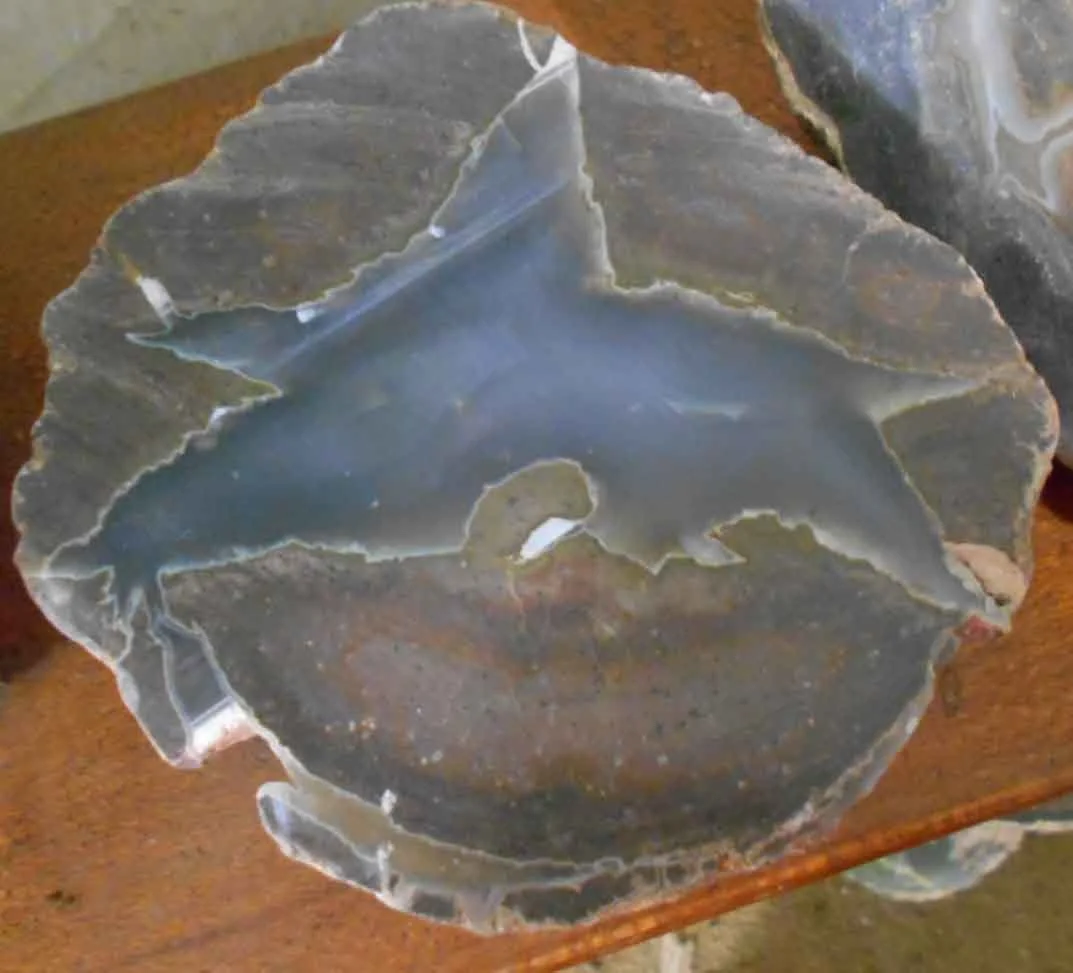
A thunderegg is a round, rock-like nodule that looks plain on the outside but often contains beautiful mineral formations inside, such as agate, jasper, quartz, or opal. When cut in half and polished, they reveal colorful, intricate patterns, making them popular with rock collectors.
Despite the name, a thunderegg is not an egg and is not related to thunder.
How they form
Thundereggs form in volcanic environments:
Lava cools and develops gas bubbles or cavities.
Mineral-rich water seeps into these spaces over thousands to millions of years.
Silica-rich minerals (like agate and quartz) crystallize inside, filling the cavity.
The surrounding volcanic rock eventually weathers away, leaving the hard nodule behind.
What they look Like
Outside: Usually rough, gray, brown, or tan, and often nearly spherical.
Inside: Bands of agate, colorful jasper, clear or white quartz crystals, or other silica minerals in striking patterns.
Where they're found
Some of the best-known thundereggs come from:
Oregon (the official state rock)
Parts of Nevada and California
Australia
Germany
Mexico
Thunderegg vs. Geode
People often confuse thundereggs with geodes, but they're different:
ThundereggGeodeForms in volcanic rocksForms in many types of rocksInterior is often mostly solid agate or jasper with some crystal pocketsInterior is usually hollow and lined with crystalsUsually has a solid, nodular structureTypically has a hollow cavity
A good way to think about it is: a geode is often a crystal-lined hollow shell, while a thunderegg is usually a solid mass with beautiful mineral patterns running through it.
Contact us
Interested in working together? Fill out some info and we will be in touch shortly. We can’t wait to hear from you!